Appraisals
Limoges Box Appraisal & Valuation Service
Find Out The Most Current Value of Your French Porcelain Limoges Box
Wondering how much your Limoges box is worth? Our Limoges Box Appraisal & Valuation Service provides knowledgeable guidance for collectors, owners, families, and buyers who want to better understand the value of their authentic French porcelain Limoges boxes. Whether you have inherited a collection, are considering selling or insuring your Limoges boxes, or simply want to learn more about treasured pieces you already own, an appraisal can provide valuable information about the characteristics that influence collectible value. Our Limoges Box Appraisal & Valuation Guide explains the key factors that influence value and provides practical information for collectors, owners, and buyers. Understanding the value of your Limoges boxes can also help you properly insure your collection, document its worth, plan an estate, or make informed decisions when passing treasured pieces down as an inheritance.
What Is a Limoges Box Appraisal?
A Limoges box appraisal is an informed evaluation of an individual piece or collection based on characteristics that can influence its collectible value. Every Limoges box is different. Factors such as authenticity, manufacturer, age, rarity, condition, craftsmanship, decoration, artist signatures, provenance, and current collector interest can all contribute to its value. Our Appraisal Service looks beyond the appearance of a piece and evaluating the details that make the piece unique and potentially collectible.
Below, we also provide information to help owners better understand the characteristics and potential value of their Limoges boxes while providing useful information for collecting, insurance, estate planning, inheritance, and other personal purposes.
Why Have Your Limoges Boxes Appraised?
There are many reasons collectors and owners may want to determine the value of their Limoges boxes.
Insurance: Knowing the value of your collection can help you provide documentation when obtaining or reviewing insurance coverage. A current valuation can also help you maintain better records of valuable or significant pieces.
Estate Planning: A Limoges collection can represent both sentimental and financial value. Documenting the pieces in your collection and their estimated values can make estate planning easier for you and your family.
Inheritance: If you have inherited Limoges boxes from a family member, an appraisal can help you understand what you have received. Knowing the history, characteristics, and potential value of individual pieces can also make it easier to properly document and preserve a collection for future generations.
Collecting: Collectors often want to understand how individual pieces fit within their collections. An appraisal can provide an informed assessment of the current value of each individual Limoges box, helping collectors better understand and document the value of their collection.
Selling or Purchasing: Understanding the factors that influence value can help buyers and sellers make more informed decisions. An appraisal can provide valuable context when researching a piece before a potential sale or purchase.
What Determines the Value of a Limoges Box?
Determining the value of a Limoges box involves considering several characteristics rather than relying on a single factor.
Authenticity: Authenticity is one of the most important considerations when evaluating a Limoges box. Authentic French Limoges porcelain is recognized for its craftsmanship, quality, detailed decoration, and French heritage. Marks, signatures, construction, porcelain quality, and decoration can provide important clues when researching authenticity. Because reproductions, imitations, and incorrectly identified porcelain pieces can appear in the marketplace, careful examination is important when determining the identity and potential value of a piece.
Manufacturer: The manufacturer or porcelain maker can influence the collectibility of a Limoges box. Different manufacturers produced pieces during different periods, and some makers are particularly recognized by collectors. Identifying the manufacturer can therefore be an important part of researching a piece's history and value.
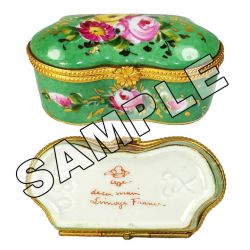
Limoges Marks and Signatures: Marks found on the underside or interior of a Limoges box may provide valuable information about its origin, manufacturer, decorator, or production period. Artist signatures and decorator marks can also provide important clues. However, a signature should not be considered by itself when determining value. It should be evaluated together with the authenticity, condition, rarity, craftsmanship, and desirability of the piece. Our Limoges Marks resources can help collectors learn more about identifying and researching these important markings.
Age: Age can contribute to the collectibility of a Limoges box, but an older piece is not automatically more valuable. A vintage or antique Limoges box may be particularly desirable because of its history, rarity, decoration, or manufacturer. However, condition and collector demand remain important considerations.
Rarity: Rarity is another important factor in Limoges box valuation. Limited-production pieces, retired designs, unusual forms, scarce subjects, and hard-to-find examples may attract greater interest from collectors. A design that is difficult to locate may have greater collector appeal than a similar piece that was produced in large quantities.
Condition: Condition can have a significant effect on value. Collectors generally prefer pieces that retain their original porcelain, decoration, hardware, and craftsmanship. When evaluating a Limoges box, consider:
► Chips or cracks
► Repairs or restoration
► Damaged or missing hinges
► Problems with clasps
► Worn painting
► Damaged gold or enamel decoration
► Missing components
► Scratches or significant surface wear
A rare Limoges box may still be collectible even if it has condition issues, but damage should be carefully documented as part of the valuation process.
Craftsmanship and Decoration; The artistry and craftsmanship of a Limoges box are central to its appeal. Detailed hand-painted decoration, intricate floral designs, animals, figures, landscapes, architectural subjects, gold accents, enamel work, and other decorative techniques can contribute to the desirability of a piece. The complexity and quality of the decoration should therefore be considered when evaluating a Limoges box.
Artist or Brand: An identifiable artist, decorator or brand may add interest to a Limoges box, particularly when the artist is recognized by collectors or the decoration demonstrates exceptional skill. However, an artist signature does not automatically establish a specific value. The signature should be authenticated and evaluated together with the overall characteristics of the piece.
Provenance: Provenance refers to the history or documented ownership of a collectible. Original receipts, certificates, packaging, family records, previous ownership information, or other documentation may provide useful background about a Limoges box. Provenance can be particularly interesting when a piece is rare, historically significant, or associated with an important collection.
How to Prepare for a Limoges Box Appraisal
Before submitting a piece or collection for appraisal, gather as much information as possible.
Look carefully at the bottom of each box and record any manufacturer marks, artist signatures, numbers, labels, or other identifying information.
If available, gather original receipts, certificates, packaging, photographs, purchase information, and family documentation.
It is also helpful to document the condition of each piece and note any known chips, cracks, repairs, restoration, or missing components.
For a collection, keeping an inventory of the individual pieces can make the appraisal process more organized and efficient.
What Information Is Important for Valuation? A thorough Limoges box valuation may consider:
► Manufacturer and porcelain maker
► Factory and decorator marks
► Artist signatures
► Approximate age or production period
► Design and subject
► Rarity and availability
► Condition
► Quality of painting and decoration
► Gold, enamel, and metalwork
► Original components
► Provenance and documentation
► Current collector interest
► Comparable market information
The combination of these characteristics helps provide a more complete understanding of an individual Limoges box.
Limoges Box Retail Price vs. Appraised Value
It is important to understand that a retail price is not necessarily the same as an appraised value.
Retail prices can reflect craftsmanship, availability, retailer expenses, current demand, and the experience of purchasing from an established specialty retailer.
Secondary-market prices can be different and may vary depending on the marketplace, condition, buyer demand, and availability of comparable pieces.
A formal valuation may also have a specific purpose, such as insurance, estate planning, or another financial or legal need. The appropriate type of valuation can therefore depend on why the appraisal is being requested.
Are Rare and Vintage Limoges Boxes More Valuable?
Rare and vintage Limoges boxes can be highly desirable to collectors, but age alone does not determine value.
Pieces that combine rarity, excellent condition, exceptional craftsmanship, desirable decoration, identifiable manufacturers or artists, and strong collector demand may be particularly sought after.
Retired designs and limited-production pieces can also attract collectors who are looking for examples that are no longer readily available.
Are Limoges Boxes a Good Investment?
Many people collect Limoges boxes because they appreciate their artistry, French heritage, craftsmanship, and sentimental significance.
While some rare or highly desirable pieces may retain or increase their value over time, collectible markets can change and appreciation is never guaranteed.
For this reason, Limoges boxes are best approached as collectible works of art and craftsmanship rather than guaranteed financial investments.
Understanding value can nevertheless help collectors make more informed purchasing, collecting, insurance, and estate-planning decisions.
Limoges Box Appraisal & Valuation FAQs
Q. How much is my Limoges box worth?
The potential value of a Limoges box depends on its authenticity, manufacturer, age, rarity, condition, decoration, artist, provenance, and current collector demand. An individual appraisal can provide more specific information about a particular piece or collection.
Q. Are old Limoges boxes valuable?
Some vintage and antique Limoges boxes can be valuable, particularly when they are rare, authentic, well preserved, artist signed, or highly desirable to collectors. However, age by itself does not determine value.
Q. What makes a Limoges box valuable?
Authenticity, rarity, condition, manufacturer, craftsmanship, decoration, artist, age, provenance, and collector demand can all influence value.
Q. Do Limoges marks affect value?
Limoges marks can help identify the manufacturer, decorator, and approximate production period. Correctly identifying marks is an important part of researching authenticity and potential value.
Q. Does condition affect Limoges box value?
Yes. Chips, cracks, repairs, missing components, worn decoration, and damaged hardware can affect value. The impact depends on the severity of the condition issue and the rarity and desirability of the piece.
Q. Can an appraisal help with insurance?
A documented valuation may be useful when reviewing or obtaining appropriate insurance coverage for a collection. For insurance purposes, owners should confirm with their insurance provider what type of appraisal or valuation documentation is required.
Q. Can an appraisal help with an inherited collection?
Yes. An appraisal can help owners better understand and document inherited Limoges boxes, including their individual characteristics and potential value. This information may be useful for estate planning, record keeping, insurance, and inheritance purposes.
Limoges Box Appraisal & Valuation Service by Our Expert Appraiser
Our Limoges Box Appraisal & Valuation Service is performed by Vida Cunningham, LimogesCollector.com founder and an expert Limoges box appraiser. Her expertise include:
● 25+ years experience as direct importer and retailer of French Limoges boxes
● Numerous visits to Limoges, France
● Professioinal relationships with artisans/factories
● Authentication expertise, appraiser
● Expansive collector knowledge
Vida's valuation is based on her specialized knowledge of authentic French Limoges boxes, including their manufacturers, markings, craftsmanship, designs, collectibility, and characteristics that can influence value. Her expertise helps collectors and owners receive correct valuation of their Limoges porcelain pieces with confidence.
Each Limoges box is unique, and valuation requires consideration of the specific characteristics and condition of the individual piece. Our appraisal service is intended to provide knowledgeable, informed valuation guidance based on the available information and characteristics of the Limoges box or collection being evaluated.
For formal insurance, estate, tax, legal, or other purposes, clients should confirm the specific appraisal requirements with their insurance company, attorney, accountant, estate professional, or other applicable professional.
Learn More About Limoges Box Value
Our Limoges Box Appraisal & Valuation Guide provides practical information for collectors, owners, and buyers who want to better understand the factors that influence the value of French porcelain Limoges boxes.
Explore our additional Limoges Collector resources to learn more about:
► Limoges Marks & Identification
► Limoges Box Price & Value Guide
► Authentic vs. Fake Limoges Boxes
► Rare, Vintage & Valuable Limoges Boxes
► History of French Limoges Porcelain
► Beginners Collecting Guide
Whether you are researching a single inherited piece or documenting an entire collection, understanding authenticity, rarity, condition, craftsmanship, and market demand can help you appreciate and protect your Limoges boxes for years to come.